Jacquie Ottman's
Green marketing Blog

Demystifying Biobased Products Keys to Marketing Success
Posted on December 06, 2012 by Jacquie Ottman & Mark Eisen
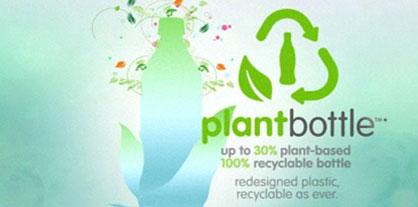
Communicating the benefits of “biobased” content, the world’s newest ecological marketing term, is often tricky. Biobased represents all of green marketing’s traditional challenges — including greenwash — but has additional, unique challenges all its own. Happily, strategies and a credible third party label now exist.
Opportunities For Biobased Products and Packaging
There are many reasons for a business to use biobased content instead of traditional petroleum-based ingredients in their products, including: it helps grow the farm economy, promotes energy independence, and helps …Read more...
Shop ‘Til You Drop—but on Earth Day?
Posted on April 24, 2012 by Jacquelyn Ottman

This year seemed to produce a bumper crop of Earth Day promotions — and a lot of accompanying media backlash. Stories written by Marc Gunther, Matt Wheeland, and a NYTimes piece by Elisabeth Rosenthal are three I saw and I’m sure you saw more yourself.
The media are making Earth Day marketers look like the moneychangers in the temple. Why is this happening? What can we do about it?
It’s happening because of dyed-in-the-wool skepticism over business’s real …Read more...
Don’t Let Skepticism Stifle Your Green Efforts
Posted on August 10, 2011 by Jacquelyn Ottman
 Ask businesses why they don’t tout green achievements more often, and their answer will likely be fear of greenwash.
Before you let such fears deter you from making investments in sustainable technology or promoting your green achievements, consider how difficult it is for any advertiser to gain consumer trust.
Consumers have always been skeptical of advertising. Take the food industry, for example. Food brands have long been under government scrutiny for their advertising claims. Today, companies are getting smeared for overpromising health benefits, …Read more...
Outlook for Reforming Greenwashers in 2011: Expect Support from Private Sector Only
Posted on January 02, 2011 by Jacquelyn Ottman
In response to a recent query from a European colleague, look for any impetus to reform U.S. greenwashers — inadvertent and intentional, during 2011 to come from the private, not government sector.
The revised FTC green guides are not expected before Spring 2012 (It will likely take that long for them to absorb comments gathered through 12/10/10.) Given the time and resources needed to review the comments and develop revised, final Green Guides, I don’t think FTC will take aim at any save the most flagrant greenwashers in …Read more...
Green Marketing 3.0 Can Re-ignite Interest in Green
Posted on November 15, 2010 by guest blogger, Jeff Dubin
Rumors of green’s demise are being greatly exaggerated. In this year of fiery political passions, the word “revolt” is in the air. However, I think Ad Age inhaled a whiff of the zeitgeist and incorrectly applied the term to consumers supposedly cooling in their ardor for green products. “Has Green Stopped Giving? Seeds of Consumers Revolt Sprouting Against Some Environmentally Friendly Product Lines” trumpets the headline of a recent Ad Age article. The author quotes Timothy Kenyon, director of GfK Roper’s Green Gauge study who more judiciously describes the …Read more...
A Better Approach to Tackling Greenwashing Than Pointing Fingers
Posted on November 14, 2010 by Jacquelyn Ottman
I have been doing a lot of finger-pointing of late in response to Terrachoice’s latest 2010 Sins of Greenwashing “Home and Family Edition”. Two wrongs don’t make a right. So, let me clarify my position—and in keeping with my normal positive self, offer some concrete suggestions for moving the industry forward.
Rather than analyzing green marketing claims as they appear on the shelf and concluding there’s either something ill-intended about the marketers’ making them (however, clumsily tongue in cheek), or that greenwashing is nearly impossible to avoid, let’s start by …Read more...
Terrachoice’s Sins of Greenwashing Report—Time for Industry Self-Regulation?
Posted on November 08, 2010 by Jacquelyn Ottman
 Most of you are familiar with Terrachoice’s “Seven Sins of Greenwashing” report. On a webinar aired in late October, CEO Scott McDougall admitted that his firm never intended to be malicious in their use of the term, “sins”. He believes that most of the “sins” of greenwashing being committed today are really not sins at all, but rather, inadvertent missteps.
Call me literal, or not a fan of hyperbole, but I believe that calling, in effect, …Read more...
Green Marketing Myopia and the SunChips “Snacklash”
Posted on October 27, 2010 by Jacquie Ottman & Mark Eisen
Many marketing experts have weighed in on what they believe to be the reasons for the current backlash against SunChips’s new compostable chip package: excess noise. If you somehow missed it, consumers complained so loudly about the snack food’s new environmentally preferable but noisy corn-based bag that the brand reverted to the old packaging for most of its line. Before we blame consumers once again for not sacrificing a little inconvenience for the sake of the planet, let’s take a step back and understand what really is to …Read more...
Stand By Your Cause: What Marketers Can Learn From Dawn’s Involvement In The Gulf Oil Spill
Posted on July 12, 2010 by Jacquelyn Ottman
 Long marketed by Procter & Gamble as an “effective yet gentle” way to keep dishes free from even the greasiest of grease, Dawn dishwashing liquid was widely publicized during the Exxon-Valdez oil spill in 1989 as an ideal way to remove residue from afflicted bird and mammal species.
Fast forward to mid-April 2010, just days before the 40th anniversary celebration of Earth Day. P&G decided to create awareness for its 30-year long support of bird rescue groups …Read more...
How to Avoid Greenwash
Posted on January 09, 2010 by Jacquelyn Ottman
Greenwashing—communicating (even unintentiionally) that one’s product or company is greener than it actually is—is the Number One challenge of green marketers today. Greenwashers can expect swift retribution from consumers, advocates and the media in the forms of lost sales and tarnished reputation.
To help smooth the way for our clients and other green marketers, I’ll be moderating a special virtual conference on Thursdday, Jan 14, 2010. It’s called: Building Credibility, Avoiding Greenwash.
Join us online for a look at unfolding strategies and best practices for establishing credibility for your sustainable …Read more...
Why Jacquie Ottman’s Green Marketing Remains Relevant
Posted on September 08, 2009 by Jacquelyn Ottman
Guest post by Peter Korchnak, who writes the Sustainable Marketing Blog.
I recently read for the first time and reviewed Jacquie Ottman's Green Marketing: Opportunity for Innovation (2nd edition) and this is what struck me: "[M]ost of what I read nowadays about sustainability and marketing, Jacquie covered in Green Marketing more than a decade ago."
Though sustainability* has made inroads throughout the corporate world, with the likes of Nike and Walmart implementing sustainable practices on a large scale, green marketing literature and blogs recycle the …Read more...
Greenest Notebooks—or Just Boldest Ads?
Posted on March 03, 2009 by Jacquelyn Ottman
In a recent blog post, Bob Pearson, Dell’s VP of community outreach and green marketing, panned Apple over a well-publicized - and ostensibly controversial - ad campaign, "The Greenest Family of Notebooks." As one of Dell’s biggest competitors, it comes as no surprise that Dell would have some not-so-friendly things to say about Apple’s bold green marketing effort.
Among Pearson’s scathing accusations, he claims that Apple's self-proclaimed "world's greenest laptops" are more smoke-and-mirror rhetoric than substantiation, and that Dell's laptops demonstrate a greater commitment to the …Read more...
Exxon Called “Climate Friendy”...What Did You Expect?
Posted on October 22, 2008 by Jacquelyn Ottman
The five companies consumers consider most "climate friendly" are GE, BP, Toyota, Wal-Mart, and Exxon. Here's why I'm not surprised (ok, maybe a little).
On the surface, the results of a recent survey by U.K.'s Climate Group and Lippincott, the brand consultancy firm, seem to fly in the face of what all card-carrying sustainability pros believe - walk the walk or consumers will cry "BS!" The survey found that 76% of Americans couldn't name a single "climate-friendly" company despite significant amounts of investment by American businesses attempting to portray their …Read more...
Eco-Logos: A Double-Edged Sword?
Posted on October 22, 2008 by Jacquelyn Ottman
Eco-logos are all the rage - but how valuable are they as a green marketing tool? Are there some hidden risks that warrant a second look? Let's consider the three ingredients of an effective marketing logo - green or otherwise - and their implications for the savvy eco-marketer.
Here are the three factors at play:
1. Recognizability. Eco-logos can reinforce green messages, a welcome benefit for sure. But of the myriad eco-logos on the market, only a few are known to consumers. They consist of the, chasing arrows recycling logo, …Read more...
How to Avoid the Carbon Offset “Gotcha” Game
Posted on October 22, 2008 by Jacquelyn Ottman
In a market that demands nothing less than completely honest, ethical, and authentic corporate communications, it can sometimes seem like no green deed goes unpunished. The NFL catching flak for its not-quite carbon neutral Super Bowl 2008 is a case in point.
For the second year in a row, the National Football League plans to offset "100%" of estimated emissions associated with the Super Bowl. Sounds pretty good, right? The NFL is taking positive climate action, from buying renewable energy certificates to replanting acreage lost to wildfires. Unlike …Read more...