Jacquie Ottman's
Green marketing Blog

Why Empowering Children is Key to Green Marketing Success
Posted on September 06, 2011 by Jacquelyn Ottman
 Good green marketing is all about making an investment in the future of the planet by promoting sustainability and protecting the environment. So it is only natural that successful green marketing campaigns can and should involve children, offering an opportunity for building life-long brand loyalty.
TerraCycle, the innovative New Jersey outfit founded by Princeton University dropout Tom Szaky, first made headlines in 2006 by selling fertilizer made from worm poop to The Home Depot and other major retailers. They …Read more...
Don’t Let Skepticism Stifle Your Green Efforts
Posted on August 10, 2011 by Jacquelyn Ottman
 Ask businesses why they don’t tout green achievements more often, and their answer will likely be fear of greenwash.
Before you let such fears deter you from making investments in sustainable technology or promoting your green achievements, consider how difficult it is for any advertiser to gain consumer trust.
Consumers have always been skeptical of advertising. Take the food industry, for example. Food brands have long been under government scrutiny for their advertising claims. Today, companies are getting smeared for overpromising health benefits, …Read more...
Why Guilt Won’t Sell Green
Posted on August 01, 2011 by Jacquelyn Ottman
 In the midst of a national energy crisis in 1978, U.S. president Jimmy Carter took to the airwaves in a cardigan sweater encouraging Americans to conserve energy by turning the thermostat to 68º F. His campaign failed because of its link to deprivation, and because it represented a threat to the upward mobility and prosperity that is America.
While some may question the idea that “bigger is better,” most Americans have not historically been willing to reverse their hard-won struggles to “have” for a …Read more...
How Consumers Can Share Responsibility for Greening
Posted on July 18, 2011 by Jacquelyn Ottman
 Tom’s of Maine can make the toothpaste more natural, but they can’t force consumers to turn the water off when they brush. Coke can make the bottles recyclable, but only consumers can drop them in the blue bin. Sun Chips can make the bags compostable, but only consumers can see that they get to a composting pile instead of a trash can.
Communications can fill this gap. With life cycle risks escalating over time, green marketers must now educate their consumers on how to …Read more...
Let the Consumer Decide “What is Green?”
Posted on July 01, 2011 by Jacquelyn Ottman
 You hear a lot of talk about the “sin of the hidden trade-offs.” I’ve got news for you, folks. Greening—like life itself—is all about the trade-offs! No product is 100% “green.” So, considering that all products use energy and create waste, green is a relative term. One product is green-er for someone at some time in some place.
Green is Relative
For instance, cloth diapers might not cause any trees to be chopped down, but they do use a lot of hot …Read more...
New Nissan Ads Shift the Way Car Buyers Evaluate Options
Posted on June 26, 2011 by Jacquelyn Ottman
 Many new green brands have been introduced over the years with what I’ve called “green marketing myopic” pitches (think GE’s “dancing elephants” and Conoco’s “cheering dolphins”), only to realize the opportunity to link environmental product attributes with the primary reasons why consumers buy (all) products in the first place. Nissan fell into this camp with the polar bear ads for their new LEAF electric vehicle. However, their new campaign suggests that Nissan’s marketing team is on an vertical learning …Read more...
What Greenwash Can Learn from Snake Oil
Posted on June 13, 2011 by Jacquelyn Ottman & Mark Eisen
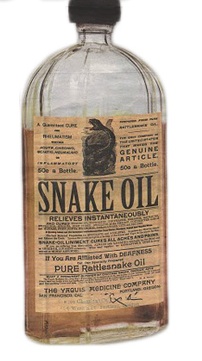 If we treat greenwash, we’re treating a symptom. We’re not finding and treating the problem, if indeed there is one, at least to the extent the hype would lead one to believe. We have to realize that first, the definition of greenwash is to be intentionally misleading. We don’t think that’s the case today, except in limited instances. Some history is in order.
In probably what could be thought of as the first era of …Read more...
The New Green Marketing Paradigm
Posted on May 16, 2011 by Jacquelyn Ottman
Conventional marketing is out. Green marketing and what is increasingly being called “sustainable branding” is in. According to the new rules of green marketing, effectively addressing the needs of consumers with a heightened environmental and social consciousness cannot be achieved with the same assumptions and formulae that guided consumer marketing since the postwar era. Times have changed. A new paradigm has emerged requiring new strategies with a holistic point of view and eco-innovative product and service offering. Posted on January 22, 2011 by Jacquelyn Ottman Win a Free Copy. To help celebrate, each business day from February 7 until March 7 I will blog one of the 20 new rules described in the book and will give …Read more...
Posted on November 15, 2010 by guest blogger, Jeff Dubin Rumors of green’s demise are being greatly exaggerated. In this year of fiery political passions, the word “revolt” is in the air. However, I think Ad Age inhaled a whiff of the zeitgeist and incorrectly applied the term to consumers supposedly cooling in their ardor for green products. “Has Green Stopped Giving? Seeds of Consumers Revolt Sprouting Against Some Environmentally Friendly Product Lines” trumpets the headline of a recent Ad Age article. The author quotes Timothy Kenyon, director of GfK Roper’s Green Gauge study who more judiciously describes the …Read more...
Posted on November 14, 2010 by Jacquelyn Ottman I have been doing a lot of finger-pointing of late in response to Terrachoice’s latest 2010 Sins of Greenwashing “Home and Family Edition”. Two wrongs don’t make a right. So, let me clarify my position—and in keeping with my normal positive self, offer some concrete suggestions for moving the industry forward. Rather than analyzing green marketing claims as they appear on the shelf and concluding there’s either something ill-intended about the marketers’ making them (however, clumsily tongue in cheek), or that greenwashing is nearly impossible to avoid, let’s start by …Read more...
Posted on November 08, 2010 by Jacquelyn Ottman Call me literal, or not a fan of hyperbole, but I believe that calling, in effect, …Read more...
Posted on October 27, 2010 by Jacquie Ottman & Mark Eisen Many marketing experts have weighed in on what they believe to be the reasons for the current backlash against SunChips’s new compostable chip package: excess noise. If you somehow missed it, consumers complained so loudly about the snack food’s new environmentally preferable but noisy corn-based bag that the brand reverted to the old packaging for most of its line. Before we blame consumers once again for not sacrificing a little inconvenience for the sake of the planet, let’s take a step back and understand what really is to …Read more...
Posted on September 23, 2010 by Jacquelyn Ottman According to a new entry in the Federal Register, EPA is now soliciting individual stakeholder input regarding the Agency’s role in the “green” or sustainable products movement. The Agency will consider the information gathered from the Federal Register notice as well as from other sources as it works to define its role and develop a strategy that identifies how EPA can make a meaningful contribution to the development, manufacture, designation, and use of sustainable products. This represents an important opportunity for …Read more...
Posted on July 20, 2010 by Jacquelyn Ottman This is a guest blog post by Paul Hannam.
Historically, marketers developed products that met consumers’ needs at affordable prices and …Read more...
20 New Rules of Green Marketing. 20 Free Books. 20 Chances to Win
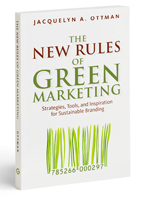 Green Marketers, Start your EVs. My new book, The New Rules of Green Marketing (Berrett-Koehler - U.S., Greenleaf Publishing - U.K. February 2011, $21.95, 252 pp.) officially launched on February 7 and is now on real and virtual shelves in bookstores and online booksellers.
Green Marketing 3.0 Can Re-ignite Interest in Green
A Better Approach to Tackling Greenwashing Than Pointing Fingers
Terrachoice’s Sins of Greenwashing Report—Time for Industry Self-Regulation?
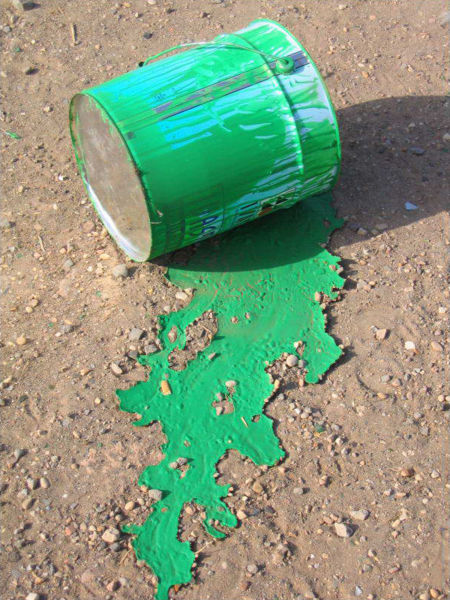 Most of you are familiar with Terrachoice’s “Seven Sins of Greenwashing” report. On a webinar aired in late October, CEO Scott McDougall admitted that his firm never intended to be malicious in their use of the term, “sins”. He believes that most of the “sins” of greenwashing being committed today are really not sins at all, but rather, inadvertent missteps.
 Green Marketing Myopia and the SunChips “Snacklash”
EPA’s Role in Advancing Sustainable Products—and You
Creating the Virtuous Cycle: Integrating Online and Offline Green Marketing
 Conscious consumers are shifting to the web even more rapidly than many other market segments. According to a report in early 2010 from Burst Media, the internet is the number one source of product information for green consumers. Almost 40% of this group prefers the web in contrast to the TV, in second place, at only 18%. All businesses and …Read more...